Early raiding uniform and clothing
In their early raids (1940–1942), British WWII Commandos wore a combination of standard British Army uniforms and some specialized or improvised gear, due to the experimental nature of Commando operations at the time.
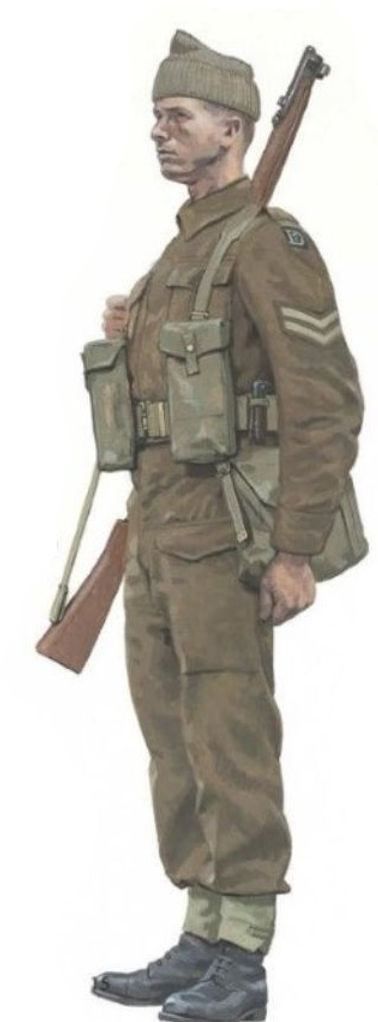
I
1. Battle Dress Uniform (Standard)
-
British Army 1937 Pattern Battle Dress was the base uniform:
-
Wool serge blouse (short wool jacket)
-
Wool serge trousers
-
-
Early raids often used dyed or modified versions of the standard BD (e.g., blackened or darkened for night operations).
2. Headgear
-
Green wool "Cap, Field Service" (side cap) early on.
-
Later: the famous green Commando beret (adopted officially in 1942).
-
Sometimes steel helmets were worn during landings (especially in Norway or Dieppe).
3. Footwear
-
Ankle boots with puttees (wrapped cloth strips) were standard early on.
-
Some wore commando-style boots later, especially in rugged terrain.
4. Webbing and Equipment
-
1937 Pattern Webbing: basic load-carrying gear.
-
Lightened loads for speed and stealth.
-
Carried Fairbairn-Sykes fighting knives (iconic Commando knife).
-
Weapons varied: Lee-Enfield rifles, Thompson SMGs, and sometimes captured or experimental weapons.
5. Special Modifications
-
Camouflage smocks or darkened clothing were sometimes used in raids (especially Norway).
-
Some Commandos wore Royal Navy items (like duffle coats or submarine sweaters) when embarking from naval vessels.
-
Waterproof or windproof outer layers (non-standard) depending on mission type.
Example: Operation Claymore (March 1941, Lofoten Islands, Norway)
-
Troops wore standard Battle Dress, with greatcoats or Navy-issued duffel coats for warmth.
-
Steel helmets during the landing phase.
-
No standard camouflage yet.
Summary:
Early Commando uniforms were improvised and practical, built around the standard Battle Dress with mission-specific adaptations (e.g., darkened clothing, extra warmth, naval gear). Standardization came later (1942–1944), especially with the green beret and improved specialized equipment.

Base layers
British WWII Commandos typically wore the standard British Army Battle Dress uniform, but under their Battle Dress blouse (the wool tunic), they generally wore:
1. Wool Undershirt
-
A khaki or grey woollen vest or shirt (often referred to as a "wool undershirt" or "issue shirt").
-
This was long-sleeved, collarless or sometimes with a soft collar, and buttoned partway down the front.
-
Made from heavy wool for warmth, even in summer.
2. Underwear
-
Wool or cotton drawers (underpants) – standard army-issue, sometimes long john-style in colder environments.
3. Optional Layers (in colder climates)
-
Wool sweaters or jumpers, especially in colder weather or during Arctic operations (like in Norway or the Highlands).
-
Sometimes private-purchase or non-regulation items were worn, especially among Commandos who had more flexibility in gear.
Notable Additions:
-
Commandos often modified or supplemented their uniforms with non-issue items, especially when on raids or specialized missions.
-
Wool or flannel shirts of civilian origin were sometimes worn underneath for comfort or practicality.