Commando Thunder: A Raid on the Roof of the World
A ripping tale of British pluck and derrin-do behind enemy lines!
Chapter One: Orders from the Top
The brass hats at the Admiralty had called it Operation Claymore—a surgical strike against the Nazi war machine on the icy fringes of Europe. But to the rough-and-ready lads of No. 3 and No. 4 Commando, it was simply another chance to give Jerry a boot up the backside.
Captain "Flash" Fairburn—a veteran of the BEF retreat and as hard as a coffin nail—stood before his men in a draughty hangar in Scotland, a map spread over a crate of tinned beans.
“The Lofoten Islands,” he said, jabbing a finger at a scribble off Norway’s frozen coast. “Cold as a witch’s heart and crawling with Germans. Our job is to destroy fish oil factories used to make explosives, sink what we can’t carry, and—if we’re lucky—pinch some codebooks.”
He looked up, eyes flinty. “Any questions?”
Sergeant "Brick" Thompson, built like a bull with fists like shovels, scratched his chin. “Are the fish friendly, sir?”
The men laughed, and so did Fairburn.
“They’ll be the least of your worries, Brick. Now kit up—we sail at dusk.”


Chapter Two: Into the Storm
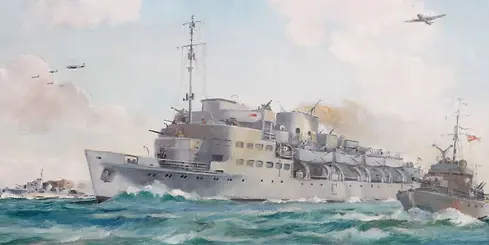
The commandos boarded a small flotilla of destroyers and troop ships under cover of night. The sea was a writhing black beast, throwing spray and sleet into their faces.
Private Johnny Deeks, the youngest of the lot at nineteen, stood at the railing, clutching a photograph of his girl back home in Surrey.
“First op, lad?” asked Corporal Algy Fraser, a wry Scotsman who’d boxed his way through half the continent.
Johnny nodded.
“Don’t fret,” said Algy, thumping him on the shoulder. “Just remember: don’t stand up in the open, and if a German points a rifle at you, don’t wait to ask questions. Now—keep that head down, and you might live long enough to buy her a ring.”
By dawn, they were slicing through a fjord under the cover of a grey, brooding sky. The snow-covered peaks of Norway loomed like the jaws of a trap.
Chapter Three: The Fight Begins
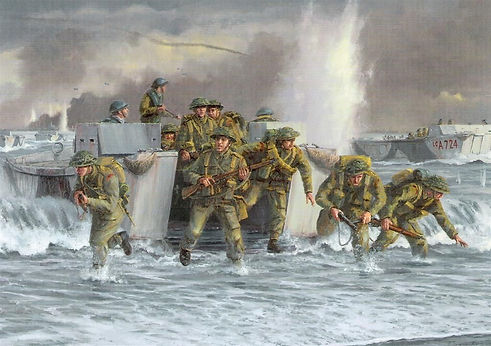
The landings came in waves, with small craft pulling up to the jetties at Svolvær, Stamsund, and Henningsvær. The commandos fanned out into the streets, black-clad shadows in the morning mist.
Flash Fairburn led his team into the heart of a fish-oil processing plant, stepping over icy cobblestones and past barrels stacked like dominos.
“Keep it quiet,” he muttered, holding up a hand. “Until it can’t be quiet anymore.”
They rounded a corner—and there he was: a Luftwaffe radio operator, just coming out of a side door with a mug of steaming coffee. His eyes went wide.
Too late.
Crack!
A single shot from Algy’s suppressed pistol dropped him before the cup hit the ground.
They moved in fast, planting charges along the processing machinery and pouring petrol over the wooden walkways.
“Time to light the match,” said Brick, grinning as he pulled the igniter. A thunderous WHUMP echoed down the fjord as the plant went up in a geyser of flame.
Elsewhere, other commando units cleared out barracks, blew up oil tanks, and seized German boats at anchor. They found frightened Norwegian workers and handed them leaflets in their language:
“We are British soldiers. Do not be afraid. Your enemy is our enemy.”
Chapter Four: The Trawler and the Treasure
Back in the harbour, the destroyer HMS Somali had boarded a German patrol trawler: the Krebs.
Below deck, Petty Officer Derek “Dixie” Moore, an expert in signals, shouted with glee.
“Captain! You’d best see this!”
He held up a bundle of soggy papers, a weathered codebook, and something that looked like part of a machine—marked with the infamous eagle and swastika.
Fairburn arrived, eyes widening.
“Is that what I think it is?”
“Aye, sir. Enigma stuff, I’d wager.”
They bundled it up like crown jewels and rushed it to the ship. Those documents would later help break the Kriegsmarine Enigma cipher, saving thousands of lives in the Battle of the Atlantic.

Chapter Five: Exit Under Fire
But the Germans were waking up.
A patrol boat came charging into the harbour, guns blazing. Mortar rounds rained down from a nearby hill where a German squad had regrouped.
“Johnny! Get down!” yelled Algy.
Johnny dove just as a shell blasted the wall behind him into flying splinters. Fairburn took charge.
“Back to the boats! Double time! Smoke ‘em if you’ve got ‘em!”
The men laid down covering fire as the wounded were hauled aboard. Johnny, his hands trembling, fired his last magazine into a sniper’s nest, then was dragged into the landing craft by Brick.
As the ships pulled away, smoke rose from the burning buildings. Svolvær was aflame, the Nazi presence reduced to cinders.

Chapter Six: Heroes’ Return
The Commandos sailed home with 10 enemy ships destroyed or captured, 3,600 tons of oil stock destroyed, and 228 prisoners in the brig. Not one British soldier had been killed.
At Scapa Flow, they were greeted with cheers—and a private telegram from Churchill himself:
“Well done, lads. Let the Hun know: he has no safe corner.”
Johnny stood beside the others on deck, the wind in his face and a strange new confidence in his heart.
“Did alright, didn’t we?” he murmured.
Algy lit a cigarette and offered him one.
“You did better than alright. Now… let’s see where they send us next.”
The End… or Just the Beginning?